


The Warriors have to travel 25 miles from the Bronx to their home turf on Coney Island when they’re framed for murder.
Warriors comes out tonight—and it has come to play. Lin-Manuel Miranda’s first full-length musical since Hamilton is not to be found on Broadway, at least not yet. Instead, Miranda and his co-writer, Eisa Davis, are introducing the show in a very 1970s way: as a full-length concept album. Packed with thrilling numbers and killer performers—including major hip-hop stars—this wild ride through a dystopian New York stakes a strong claim to a place in the future of musicals and recordings alike.
Warriors is adapted from the 1979 cult film The Warriors—a touchstone of hip-hop culture—in which the titular street gang tries to make its way home after getting framed for the assassination of a charismatic leader named Cyrus, who had assembled the city’s major gangs in the Bronx to propose a truce. In this version, the Warriors are all women. So is Cyrus, who is voiced by no less a cultural eminence than Lauryn Hill. The movie’s seductive female gang the Lizzies is now the all-male Bizzies, and other parts are played by Marc Anthony, Colman Domingo and Billy Porter, among others; representing the five boroughs in the opening song are Busta Rhymes, Ghostface Killah, Chris Rivers, Cam’ron and Nas. (David Patrick Kelly, who played the creepy villain Luther in the film, makes a cameo.)
RECOMMENDED: The 6 New York locations that helped turn The Warriors into a cult classic
Miranda and fellow writer-performer Davis have been friends since 2007, when they both starred in Off Broadway musicals that went to Broadway the following year: he in In the Heights, she in Passing Strange. When he chose to adapt The Warriors, he says, he thought right away about Davis, whose plays include the memoir Angela’s Mixtape and the Pulitzer Prize finalist Bulrusher. “I was like, Who’s smarter and cooler than me?” he says. “And I immediately thought of Eisa.” The two first met to discuss the project in the basement of the Drama Book Shop in January, 2022; two years later, they started recording the album.
We sat down with Miranda and Davis at the Public Theater, before one of Warriors’s two prerelease listening parties, to discuss the choices that went into their adaptation—and why the Warriors’ epic journey can be seen as “a hip-hop origin story.”
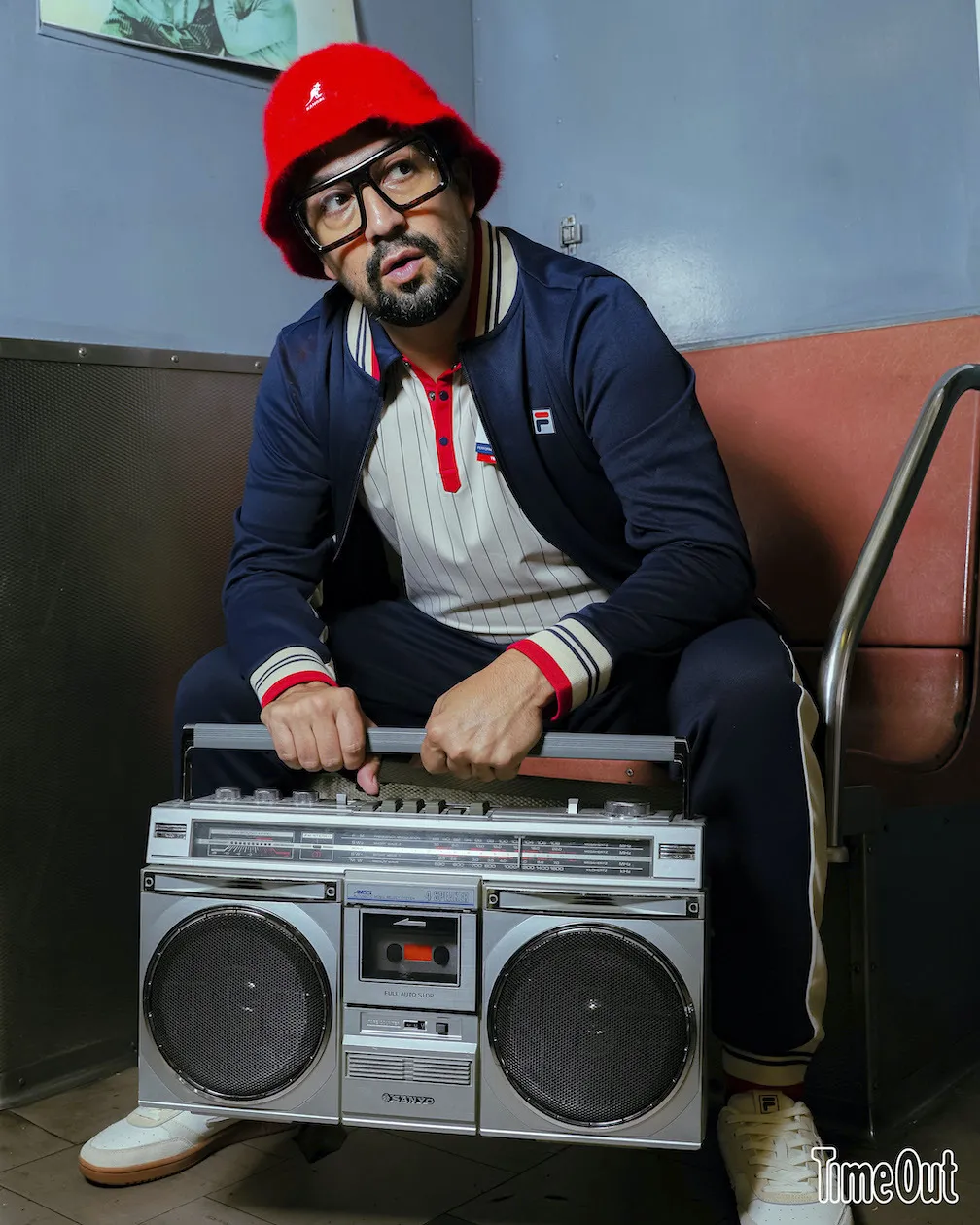
How did you first become interested in The Warriors?
Miranda: I saw the movie when I was four. My downstairs neighbor was my best friend, and his older brother had it on VHS. I remember David Patrick Kelly clinking the bottles being the first bogeyman in my life. I saw that movie many, many times, and that was sort of my first mental map of New York: [Gang member] Rembrandt tracing his finger up the subway map. I remember tracing that same route on the slightly different mid-Eighties map that I lived in. In 2009, after Heights had been running about a year, a college classmate of mine named Phil Westgren emailed me and said, “I’m working for producer Larry Gordon, and he had—or his wife, actually, or his ex-wife had—the idea for a Warriors musical. What do you think?” And I wrote him back, “Here’s why it could never work.” [They laugh.] “I love The Warriors and I’ve seen it more than maybe any other movie, but here’s why I don’t think you could translate an action movie successfully.” But my subconscious was like, “Challenge accepted.” Smash cut to 2016 or 2017: I’m on the other side of performing in Hamilton, and I’m thinking, What do I want to do next with my life as a writer? And there was a whole part of my brain that was like, “Warriors! Warriors! We are going to figure it out.” This was also around the time of Gamergate online. The 2010s was when I was extremely online; I’m not so much anymore. [He laughs ruefully.] I don’t know if you remember Gamergate, but these women who worked in video games were getting doxxed and getting their fucking lives ruined by guys for no particular reason other than to cause chaos and LOLs.
Davis: Just misogyny.
Miranda: Misogyny, but also something more pernicious—it was just, like, “Here’s her address and whatever happens, happens.” And that cruelty reminded me of Luther in The Warriors. I connected those two. And I went, Oh, what if the Warriors are women, and Luther shoots Cyrus and says it was the girls and goes on his merry way? And also, in getting together with Eisa, we found that every plot point was made more interesting if they’re a female gang. I love the movie and it exists on two stone tablets in my head. But in terms of writing our way through it and why it would sing, it was just infinitely more interesting to write these women trying to fight their way home. And that’s where you tag in and talk. [Laughs]
Davis: Lin is this 5’9” titan of musical theater and also just music, period, in our culture. I have always been this huge advocate of the marrying of hip-hop as a culture and theater as a culture, and Lin is in this lineage of all of these artists who have been doing this for so very long. That’s a huge part of what the aesthetic magnetism has been. And he’s also a buddy, right? So when Lin was like, “Do you wanna work on this?” I was like, Well, I’m not gonna say no! Like, of course. But I had to watch the movie, because I had not seen it all the way through. I’d only known it through hip-hop. As Lin said, it’s on tablets, and then the scripture from those tablets is sampled in hip-hop.
Miranda: It’s in Wu Tang songs, Common songs, music videos…
Davis: It’s everywhere—even now. LL Cool J just put out a new record, and the first track is called “Spirit of Cyrus.”
Miranda: They sample one of the people in Cyrus’s audience in the movie going, “Go on, Cyrus! We’re with you brother!”
Davis: Yes. It is deep in the bloodstream, in the DNA, of what hip-hop is and what New York is. I got to watch the movie knowing that it was on that pedestal, but also having the freshness of not being so reverent to it; I could just say, Oh, yeah, we don’t need this part, we don’t need that part. I just worked on [the TV miniseries] Justified: City Primeval, which was an adaptation of an Elmore Leonard book. What Leonard said was: All you need to do is hang up the original text and strip it for parts. And I feel like that’s what we got to do with this. I could go in and now with this new version driven by women at the center. And I could also think about what that does in terms of just identity and representation throughout, so that we are really coming at it from the perspective of 2024 and not 1979—and not 1965 from the novel.
We are really coming at it from the perspective of 2024 and not 1979—and not 1965 from the novel.
Miranda: And not [fourth-century BC] like the story the novel is based on!
Davis: Exactly. But I think what this gets at is how mythic the work is. It gets at these very primal fears, these very primal needs that we have for crew, for family, for survival.
Miranda: I always say that The Warriors is like a visual guide to everything you are afraid of in New York City. Someone falls in the subway tracks, there’s a track fire, you get chased by the cops, you get chased by the wrong gang in the wrong neighborhood—everything you think is scary that will happen, there is an amazingly vivid image of it in this movie. It’s like a starter guide for New York fears.
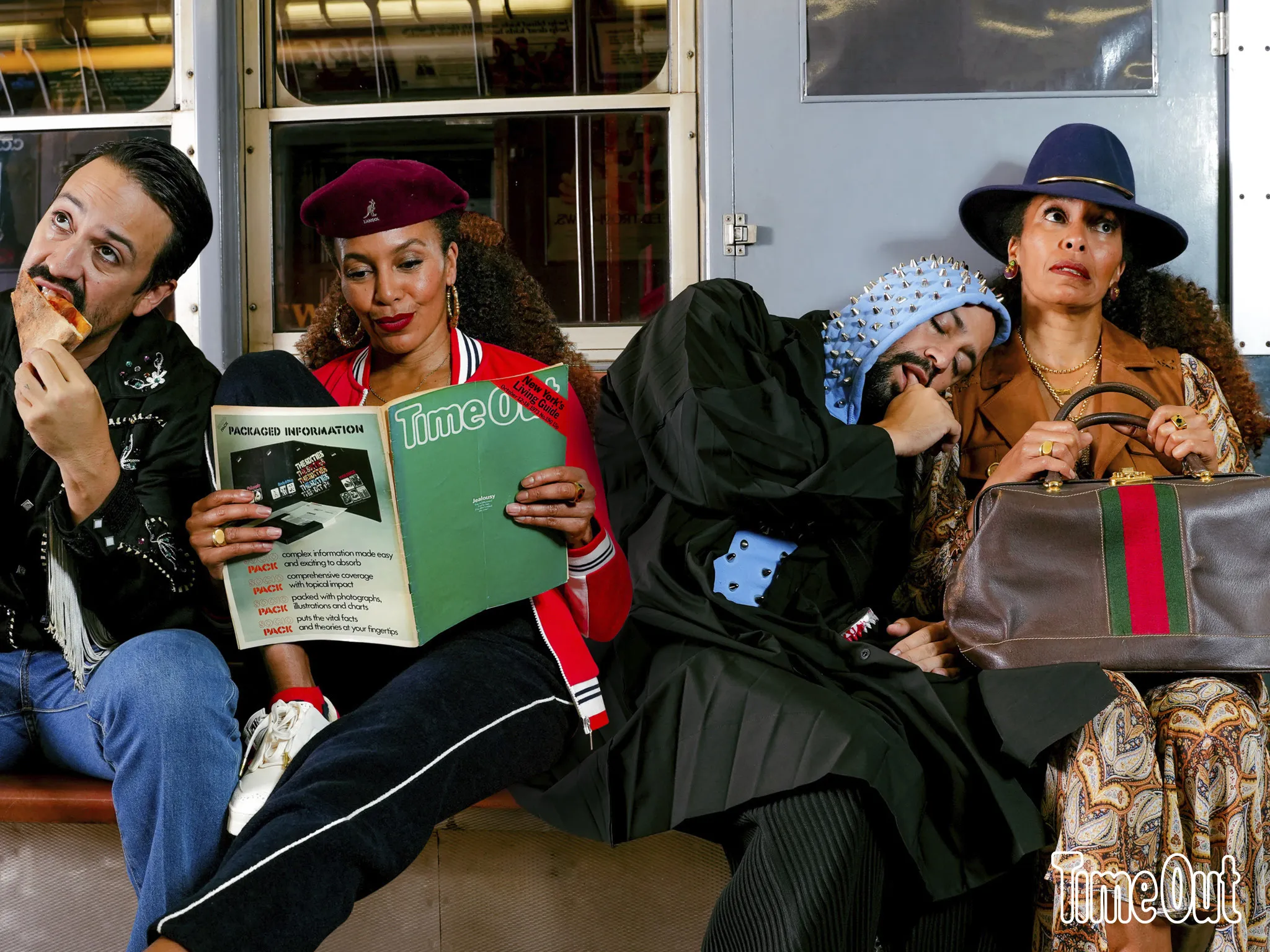
Especially in the Seventies, right? A lot of movies set in New York City at that time have subway scenes that are just infernal. In movies like Dressed to Kill and Death Wish and The Taking of Pelham One Two Three, it seemed like America and the world were being told that this was a terrifying and dangerous hellhole. And The Warriors seems very much in that culture of fear.
Davis: But what’s interesting is the perspective. Because, you know, who’s scared? The prom couple who gets on the train. But I think the thing that really makes all of hip-hop love it, is that it’s about these gangs—these gangs that then became organizations like Zulu Nation, now called Zulu Union, or the Ghetto Brothers, a music group. One of the lines that is repeated on the album is, “This is the sound of something being born.” In some ways this is a hip-hop origin story. I mean, it’s later than the 1973 party on Sedgwick Avenue where Cool Herc was spinning and plugging into the lampposts—the moment that we have now decided was the birthplace of hip-hop—
The Stonewall riots of hip-hop.
Davis: Exactly. Yes! And by [the late 70s] there’s the Sugarhill Gang and Grandmaster Flash. There were all these communities of youth who said, “You know what? We don’t have to fight.” The truce that happens in the film is something that really happened in real life in the Bronx, led by Benjy Melendez of the Ghetto Brothers. And what they said was, We don’t have to fight. We can come together as all of these organizations throughout these turfs and communities. It’s this beautiful moment of transformation where it becomes about a culture exploding.
I always say that The Warriors is like a visual guide to everything you are afraid of in New York City.
Miranda: I think what Eisa tapped into was that the promise of peace is actually the motivating action of the movie. They all leave their neighborhoods because of the promise of peace. The other thing I love about the movie—and the reason I think hip-hop culture and our culture in general has embraced it—is that it doesn’t judge its characters at all, or judge the conditions in which they live. In fact, the moment you see a character judging them, you wanna stick up for the Warriors. It plunges us into the situation and goes, Fuck, we gotta get back home. And that is the most universal story in the world.
Right—the Warriors are afraid of gangs in the movie, but they’re also a gang themselves. It’s not an outsider’s view of a gang.
Miranda: Absolutely. It just puts us in the situation and tells a beautiful, simple story really well.
In the movie, what Cyrus is proposing is not just a truce among the gangs, but a truce among the gangs so that they can control the city. It’s not just sunshine and roses—it’s an organized criminal enterprise. That has shifted somewhat on the album, where it feels like the emphasis is much more on the cooperative nature.
Davis: Yeah. I totally hear what you’re saying. That’s exactly what Cyrus is saying in the film: Let’s just take over and be bigger than the cops and the mob. And we’ve tempered it into us all being at peace in the city. It’s not about trying to take over.
Miranda: The promise of peace is what was interesting to us. To leave your neighborhood—the place where things run smoothly because it’s your block—because there’s this opportunity to be able to walk through the city freely and without fear.
And then Cyrus is assassinated. The assassination of peacemakers—like Gandhi and King and Rabin—is an interesting phenomenon. There’s an element in the world that finds them threatening. That element here is Luther, and his intensely metal sound corresponds with his nihilistic attitude.
Davis: He’s chaotic evil.
Miranda: Chaotic evil. That’s his D&D type. Before Eisa came onboard, I tried to write rap verses for Luther. But the thinking felt too organized—it felt like someone who’s got a methodical plan. In the same way as in Hamilton, I was always trying to match flows to what the pattern of thought would be for the character. It was Eisa who was like, Have you heard this band Alekhine’s Gun? It’s just: [He emits an extremely loud guttural roar.] I could feel my Catholic grandmothers in heaven crossing themselves as I listened to it. I’m a big metal fan, but I was like, Okay, here’s a sound we have never heard in a “show tune.”
It’s like the sound of the earth opening up.
Miranda: It’s the most surprising thing we could do. And that’s always what’s fun and what wins. It’s just this really fun chaotic energy. It’s virtuosic and controlled, but chaotic.
And that vocalist on the album is unbelievable.
Davis: Yeah, Kim Dracula’s incredible. And of course there are all these rock musicals that this is also a love letter to—
Miranda: Seventies concept albums like Jesus Christ Superstar—
Davis: So the rock sound was really important. But going all the way with metal was, I think, the difference.
Miranda: These go up to 11!
Davis: The sound in general was really huge for us in how we could bring all of these different characters to life.
Miranda: We started by making each other mixes of 70s music we liked, or music from now that refracts through the 70s, like the Strokes. With the notion that every gang could sound different, every neighborhood could sound different.
Davis: Really trying to get at that patchwork quilt of New York in terms of the different sounds.
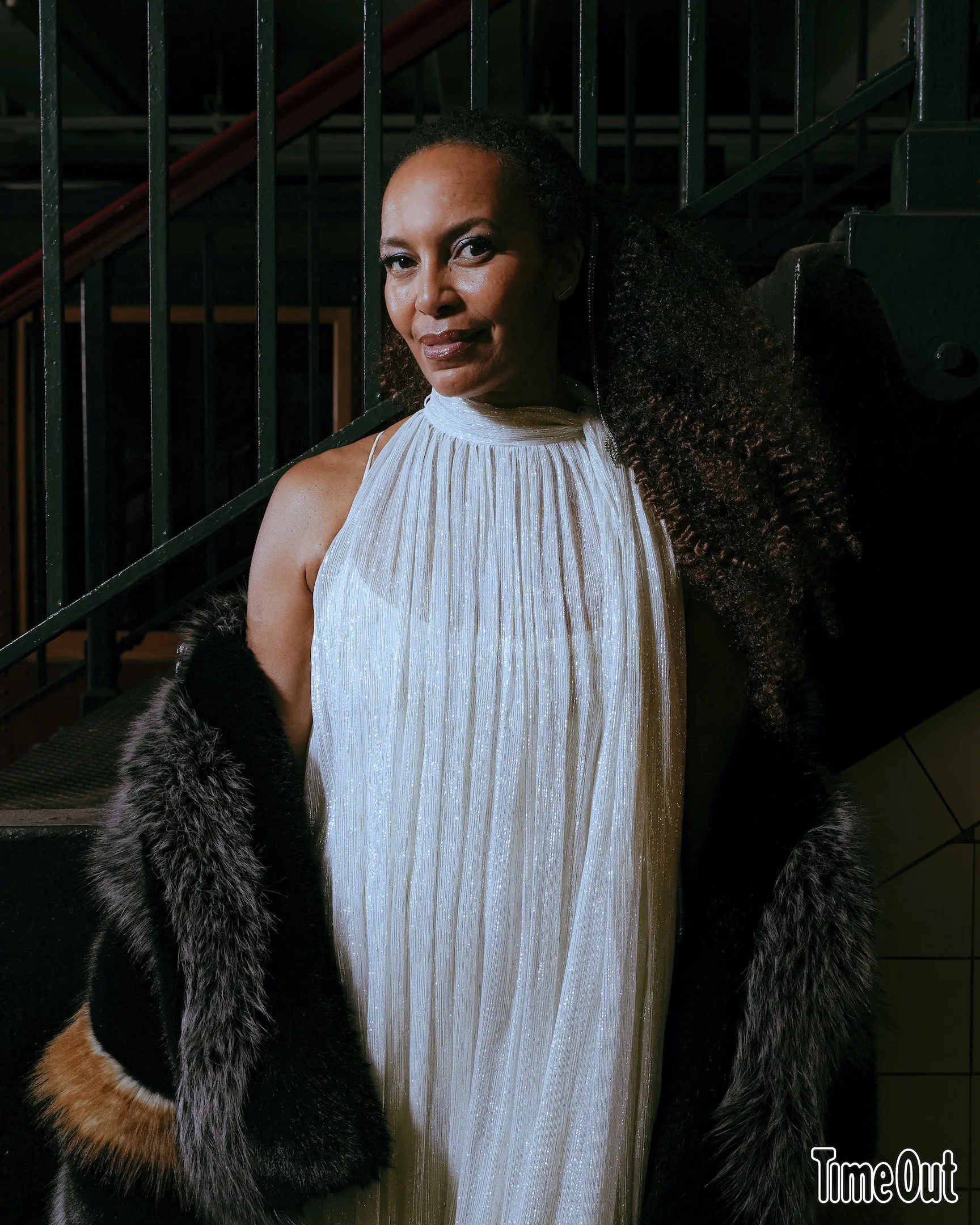
There’s hip-hop in the score, of course, but there’s also a strong overlay of pop, including music that evokes specific cultures and ethnicities. How did you choose those sounds?
Miranda: We really went piece by piece. First of all, if Eisa had a musical impulse, it just went in the pot. If you listen to the opening song, you can actually hear her voice memo where she was like, “I’m hearing this for the opening number,” and then she went: [He sings a musical phrase.] That is the horn line for the opening number. I actually put her voice memo at the top. You can hear Eisa just before the beat drop.
Davis: I think the initial idea was that I would write the book.
Miranda: But that went out the window very quickly. I was just like, Give me everything you have and we’ll throw it in the gumbo. A lot of Eisa’s impulses can be found in that opening number and in the sound of the Warriors—in a lot of those bass lines, in “Roll Call,” in “Woodlawn Cemetery.” And when it came to the Turnbull A.C.s., which in a way is my favorite gang, because they’ve got a converted school bus, so it’s sort of like Mad Max: Fury Road—
The whole listening experience was very Fury Road for me.
Davis: Mm-hmm!
Miranda: But in my brain, I was like, There weren’t really skinheads in the South Bronx in 1979. There were fuckin’ Puerto Ricans! And I thought about Fania, which is a global salsa movement but really started in the South Bronx. Willie Colón is from the Bronx—all those guys who reinvented salsa in the seventies were in the Bronx, and they were fucking gangster. So I thought, Okay, we can make that a Fania gang. And since Marc [Anthony] is famous for playing Héctor Lavoe, one of the greatest voices to come out of Fania, we tapped him and his band for that. I pictured him as the guitar guy in Fury Road. He’s the balladeer literally strapped to the front of the bus singing while they search for the Warriors. And then we reimagined the gang on skates in Union Square and we sent them to 96th Street and made them the House of Hurricane. It’s our ode to the Ballroom sound and Paris is Burning and that entire subculture. What are some of the other gangs we’ve got?
Davis: Well, we have the Orphans. For all of these songs we were like, What’s the right vibe that we need emotionally?
Miranda: We landed between pop punk and the Police for the Orphans. It’s a very ska, Police-ish intro and then it turns into like Blink-182. Because they’re Herbs, to use a real New York-ism.
Davis: We said Herbs on the West Coast, too! Yeah, they’re Herbs. They’re marks. Jesters.
And then of course there’s the Bizzies.
Davis: Boy band! Everyone was so mad when we were recording that. They were like, People spend years trying to come up with a song like this, and Lin just rolls out of bed like, Here we go! And actually, that song is based on a little song that you wrote for [your son] Frankie.
People spend years trying to come up with a song like this, and Lin just rolls out of bed like, Here we go!
Miranda: Yeah, it’s a melody I wrote for my kiddo. I needed a real charming melody for this moment so I stole it from my kid and used it for this. It was a lullaby theme that I repurposed as a boy-band theme. And we wanted it to be the boy band, so again it’s refracted through 2024. You’ve got Josh Henry giving you the best Boyz II Men soul. You’ve got Stephen Sanchez crooning away. And then we got Daniel Jikal to bring the K-pop flavor.
The pop aspect hearkens back to those ’70s rock-opera concept albums. That was such a big element in those Andrew Lloyd Webber and Tim Rice musicals—the idea that the songs were modern enough that they could maybe be radio hits as well.
Miranda: What Andrew and Tim did was even more audacious. They released the song “Superstar” without even having done the album of Jesus Christ Superstar yet, because they couldn’t get the record company to commit to a full album. It was called blasphemous and sacrilegious and it got a lot of play so the company was like, All right, go make the album. I really love that album. But listen, when you’re broke, every cast album’s a concept album, because you’re picturing the show in your head and connecting the dots. That’s how I experienced almost every cast album my parents had as a kid, and that’s how a lot of people experienced In the Heights and Hamilton if they didn’t have access to them. It’s funny—I had breakfast with Andrew Lloyd Webber. I knew he was coming to town and I invited him to breakfast, and I said, “I’m stealing a page from your playbook. Eisa and I are working on this concept album. Do you have any advice for me?” And he said, “Yes: Get a live band.” He talked about the joy of taking your music to a band and playing with them and exploring the sounds with accomplished musicians. It’s a different experience—it’s more than just, “Here’s the sheet music. Play the notes.”
Davis: But even before Andrew Lloyd Webber said that, we were already headed that way. At one of our early meetings, I was like, We just need this to be something that happens with a band and have that fertilization happening. And we got to have that, which was incredible.
Miranda: Mike Elizondo, our producer, is based in Nashville. He called his best guys and his closest friends, and we went down there for two weeks to explore the songs. We’d come in with a song, but also follow where the sessions took us—sort of like how when you shoot a movie, you have your plan but if the light is doing something amazing that you then you follow that. And that was really a fun part of the process because it’s not something you get if you’re just sitting down and writing a musical.
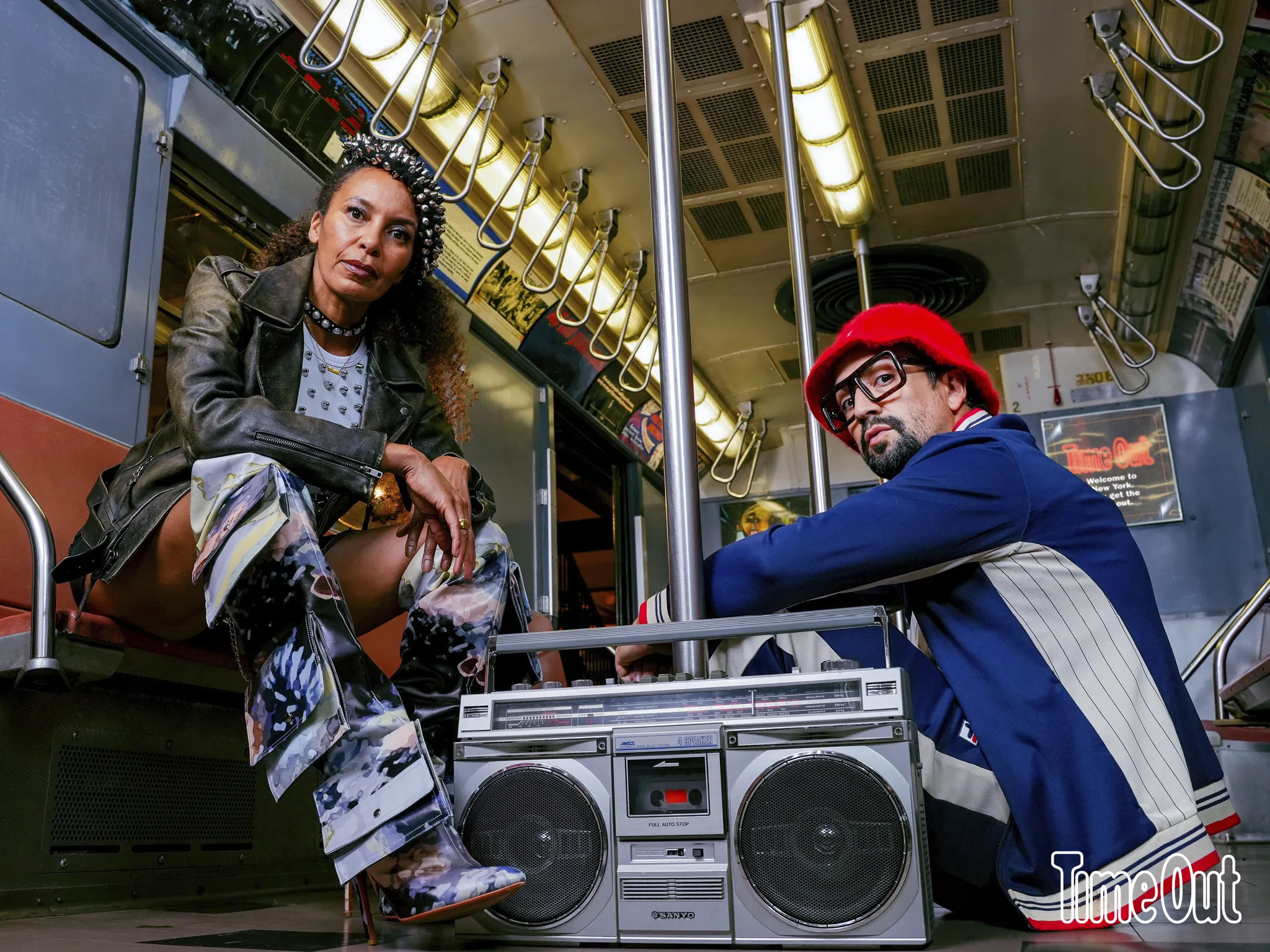
And then the album was recorded earlier this year?
Davis: Well, we started with demos. That’s a whole other story about how we ended up with our Warriors being the Warriors that they are [i.e., played by Broadway actors including Jasmine Cephas Jones, Phillipa Soo and Amber Gray]. It was because we did those demos first, and then we were like, Who else could be any better?
Miranda: I think we’d been thinking about it so long that we’d subconsciously cast the show. So when they came in, we just looked at each other like, They’re killing it. We could try to chase pop stars to be these people, but—
Davis: But they won’t be any better. And would they be able to have that instant chemistry? And be able to act? They had so much to do and they had to do it so quickly and they just were incredible from the get.
Miranda: We actually did the Warriors part before we even did the tracks. And then we went to Nashville for two weeks—
Davis: And did our band tracking there. Yeah.
Miranda: And then we started chasing our gangs around and finding the fancy folks. I mean, that opening number alone: You go to Staten Island to record Ghost. You go to Arizona to record Chris Rivers, Big Pun’s son, who lives down there. We went wherever they were.
Davis: And we chased Ms. Lauryn Hill, via her manager, as she traveled all over the world.
Miranda: And then one day we got a Dropbox and it had the vocals. And she had added background vocals, and really done all the work on her end. It was stunning.
Davis: And we melted.
Hill’s voice is so authoritative—it has a rougher quality than it did when she was first coming on the scene.
Davis: It’s got more life in it. It’s got some smoke.
Miranda: The Miseducation of Lauryn Hill is the number-one album of all time according to Apple Music. So it isn’t any stretch of the imagination to picture Ms. Hill playing Cyrus in this male dominated world and still coming out on top and being in charge. I wrote a version of that song before Eisa came aboard, but my conversations with Eisa led us to think more about how she’s a woman in this role. She has that lyric, “Imagine what I had to do to stay on top”—in this field surrounded by all these dudes.